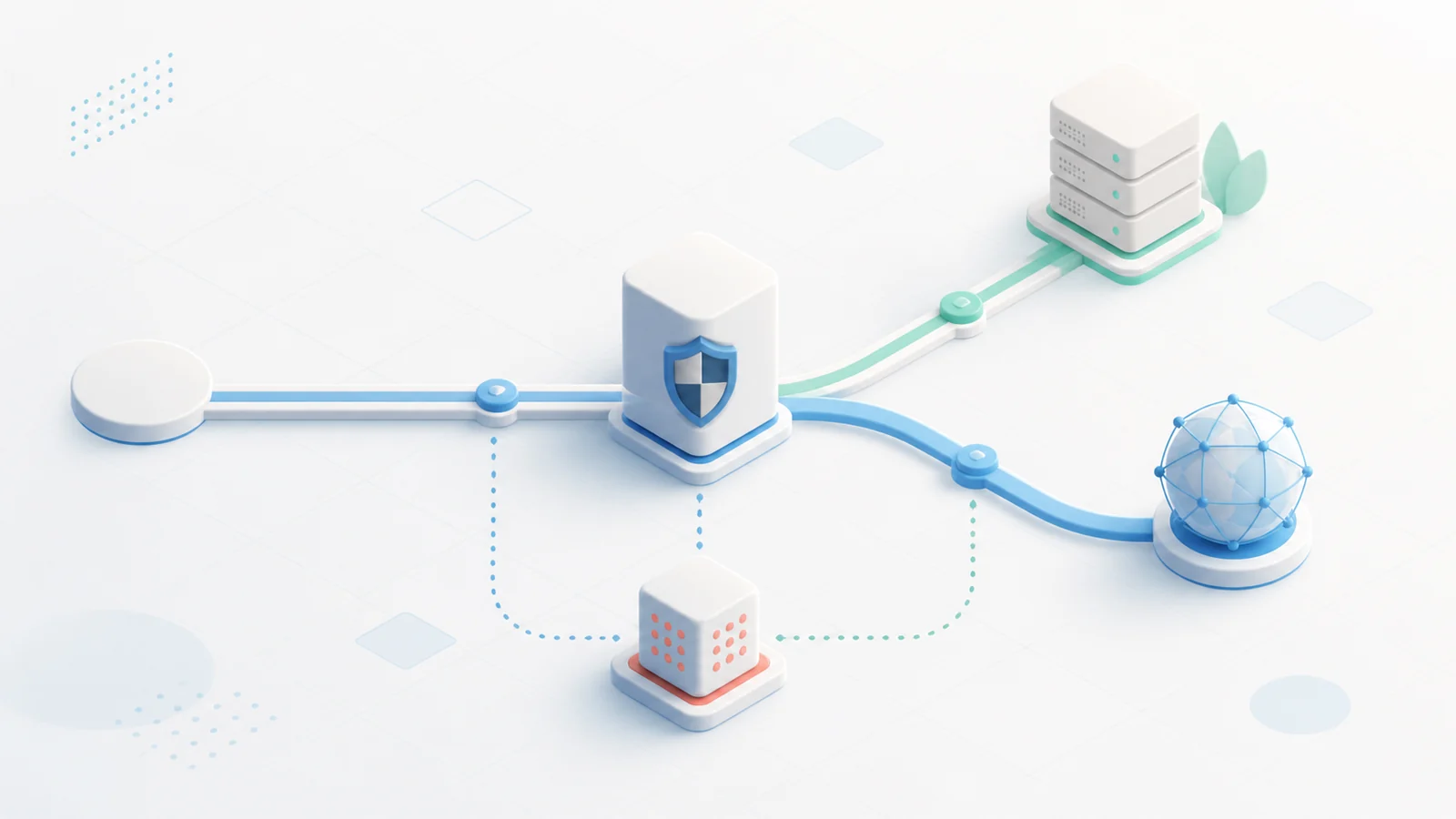
A tunnel can authenticate correctly and still produce a poor user experience when routes and name resolution disagree. Split tunneling sends selected business traffic through the Firebox while other traffic uses the local internet connection. Full tunneling sends a broader route through the organization. Neither mode is automatically safer in every environment; each changes visibility, capacity, privacy, and exposure.
Start with required applications
List the resources remote users actually need, including their addresses, ports, dependencies, and DNS names. Broad private-network routes are easy to create but expose more reachability than necessary and make later segmentation harder. Map applications to the smallest practical prefixes and enforce access with firewall policy in addition to route delivery.
Include hidden dependencies such as identity servers, update services, file references, license servers, and internal APIs. A front-end page may load while a background call fails because its destination was omitted. Application owners can often identify dependencies that packet-level testing misses.
Understand route precedence
The endpoint chooses routes by prefix specificity and metric. Home networks frequently use private ranges that can overlap company networks. When both claim the same prefix, the device may send traffic to the local router instead of the tunnel. Choose organizational address plans carefully and test common home subnets.
Inspect the actual route table after connection instead of assuming the client received the intended policy. Confirm the destination prefix, next hop or interface, and metric. Avoid adding permanent manual routes as a quick fix because they can outlive the session and conceal the real configuration defect.
Design the return path
Outbound routing is only half of connectivity. Internal routers and servers must return traffic to the VPN address pool through the Firebox. A missing route or unexpected NAT rule can create one-way sessions that appear intermittent. Use traffic monitoring on both sides of the gateway to confirm request and reply paths.
Address pools should not overlap internal, partner, cloud, or common local ranges. Monitor pool utilization so that successful authentication does not end in address exhaustion during busy periods.
Match DNS behavior to the routes
Internal names often require organizational resolvers, while public names can use local or corporate DNS depending on policy. Decide which resolver receives which query and how search suffixes are supplied. If an internal name resolves to a private address, the route set must carry that address through the tunnel.
Test both short names and fully qualified names. A short name may depend on a missing suffix, while a fully qualified name reveals whether the resolver can answer at all. Clear stale caches during controlled testing, but do not use cache flushing as a substitute for finding incorrect DNS delivery.
Compare split and full tunneling honestly
Split tunneling reduces Firebox bandwidth demand and can improve performance for video meetings and public cloud services. It also lets an endpoint use local and corporate networks simultaneously, which must be addressed in the endpoint and network risk model. Full tunneling enables centralized inspection and consistent egress but increases latency, capacity requirements, and the effect of a gateway outage.
Document why the chosen model fits the organization. Review it when applications move to cloud services, workforce size changes, or security controls shift to managed endpoints and application-aware access.
Test for leaks and unintended reachability
Validate public IP behavior, DNS resolver selection, internal access, blocked internal destinations, local-network access, IPv4, and IPv6. A policy designed only for IPv4 may leave unexpected IPv6 behavior. Test before and after connection and from representative external networks.
Use the independent WatchGuard Firebox SSL VPN overview to place routing choices in the larger access chain. Save a known-good route table, DNS results, and packet-flow record. That baseline makes future troubleshooting faster and turns route changes into measurable decisions rather than guesswork.